


How to Fold a Brochure: A Step-by-Step Professional Folding Guide
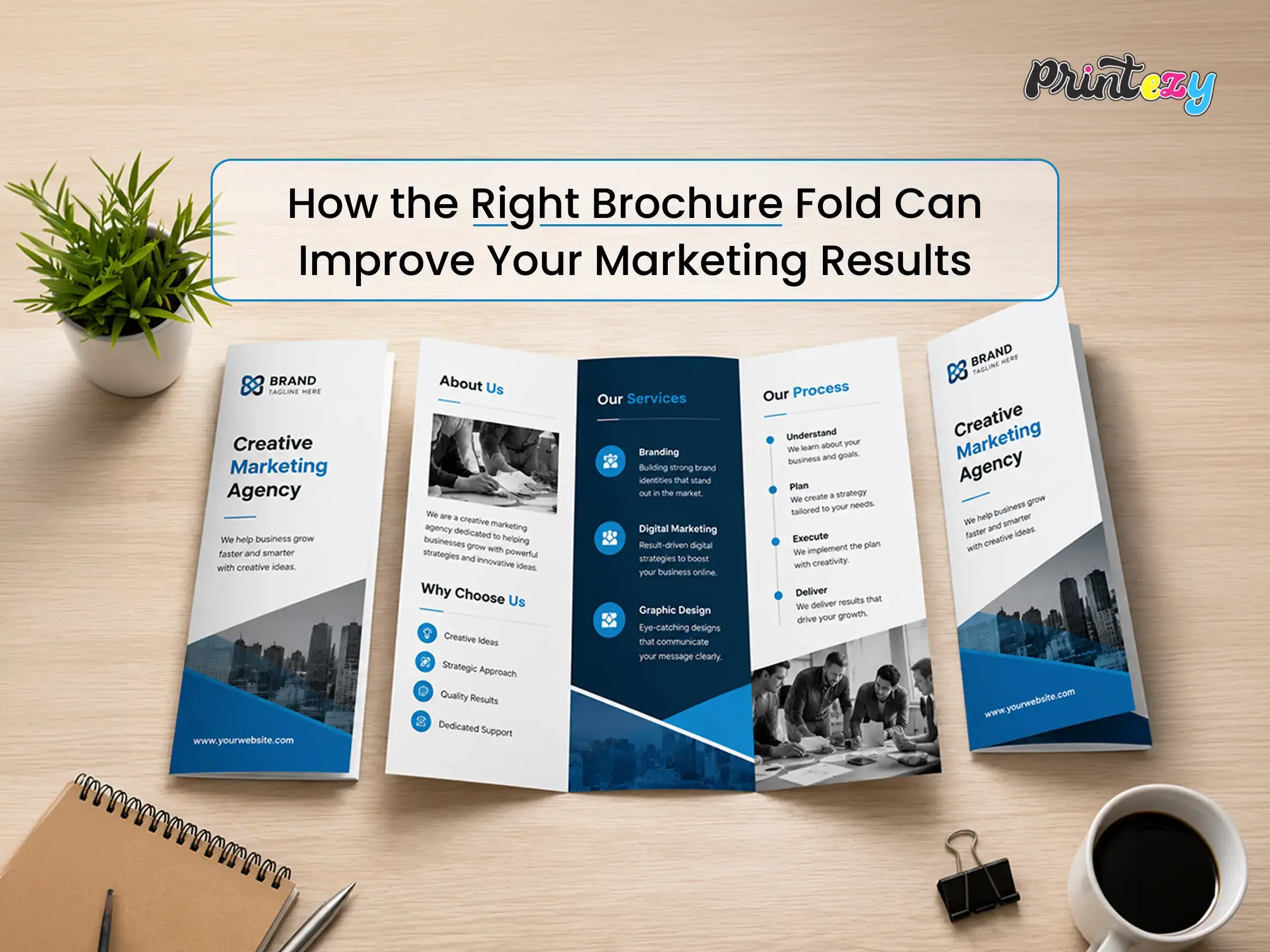
An effective brochure design will certainly attract the attention of all viewers, but properly folding it will give it a professional touch. No matter whether you are trying to introduce a company, invite people for an event, or give product information, knowing how to fold a brochure will ensure that the presentation is made neatly and effectively. There are many ways of folding depending on your needs.
In this brochure folding guide, we’ll discuss the most common folding methods, provide useful tips, and learn how to prepare your brochures professionally.
Why Brochure Folding Matters
Brochure folding goes beyond being an activity done for aesthetic purposes. The readability and the user experience of the reader are improved by folding the brochure properly. Folding of the brochure will make it easier for the viewer to read through the panels of the brochure.
In addition, choosing the correct fold makes it easy to organize the information. Information about the products, services, pictures and the contact information becomes easier to locate.
Understand the Most Popular Brochure Fold Types
It is important to learn about the most common brochure fold types before going through the process of folding.
1. Half Fold Brochure
A half-fold brochure folds one sheet directly in half, creating four large panels, similar to a booklet.
This option is ideal for:
- Company profiles
- Event programmes
- Product catalogues
- Educational materials
Since each panel is larger, it accommodates bigger images and longer content without appearing crowded.
2. Z Fold Brochure
Z-Fold produces three panels that are folded in an alternating manner to give a zigzag look.
This format is particularly useful for:
- Maps
- Step-by-step instructions
- Timelines
- Process explanations
Moreover, readers can open up a brochure in sections without opening the whole brochure.
3. Tri-Fold Brochure
In a tri-fold brochure, one sheet is divided into three panels which fold together to form six panels for printing.
This style works well for:
- Business promotions
- Service overviews
- Travel brochures
- Restaurant menus
- Healthcare information
Because it offers multiple sections, readers can move through information in a logical sequence.
Folding the Brochure Paper
Let’s go ahead and fold the paper now to achieve the required brochure style. In order to achieve the desired style of fold, do as follows:
1. Half Fold Brochure
If you are wondering how to make a half-fold brochure, read on below and get your answers to these questions.
- First, place the paper flat on the table.
- Second, during the process of folding the paper in half lengthwise, be sure to align the edges.
- Third, create a crease by pressing the fold. If necessary, make use of a bone folder or ruler to make sharp creases.
2. Z Fold Brochure
Now, if you want to know how to fold a z-fold brochure, follow the steps given below.
- Lay the paper out flat on the surface.
- Divide the paper in three equal sections by measuring the paper.
- The first mark shows the point where the left section is folded over the center section.
- The second mark indicates the point where the right section is folded under the center section.
- For creating crisp creases, align the edges and press down.
3. Tri-Fold Brochure
If you're wondering how to fold a tri-fold brochure, follow these simple steps.
- Firstly, place the paper on a level surface.
- Divide the paper in three equal sections by measuring the paper.
- Fold the left section over the right section at the second mark and the right section inside at the first mark.
- Check whether the edges are in line and press down to create creases.
Tips for Accurate Brochure Folding
Even the best design may lose its effectiveness because of unequal folds. Therefore, keep these professional tips in mind.
- Measure the fold lines carefully before folding.
- Fold gradually in order to keep alignment.
- Score thick paper using special devices.
- Keep hands clean to avoid fingerprints.
- Stack brochures only after finishing all folds.
This easy advice will benefit you a lot.
How to Choose Appropriate Paper for Your Brochure
Choosing appropriate paper plays a crucial role in the consideration of the way that your paper feels, folding and pricing. Choosing the best paper for your brochures depends entirely upon your marketing needs. Below is a list of paper types, which are commonly used in brochures:
1. Coated Paper (Gloss or Matte)
This is the most commonly used type of paper for brochures due to its outstanding surface quality and colors. Some of the most frequently used grammages of coated paper include 128g, 157g, and 200g; the higher the grammage of the paper, the heavier it
becomes.
2. Matte Coated Paper
This kind of paper has a non-reflective surface and thus provides a more refined and subtle image.
3. Uncoated Offset Paper
This type of paper is better ink absorbent and provides a natural writing surface. It is preferred more for letterheads and notebooks, while it is used for brochures in case of handwritten information.
4. Textured or Specialty Paper
This paper has different textures, colors, or surfaces, thus giving additional value to the brochure. Despite its higher price, it is a perfect paper choice for luxury companies.
Should You Fold Brochures Yourself or Choose Professional Printing?
Manual folding could work well if smaller quantities are being dealt with. In cases where there is a large number of printouts, however, there needs to be an element of consistency that will be hard to deliver manually.
Professional folding equipment delivers:
- Accurate folding
- Sharp creases
- Faster output
- Quality
- Less wastage
As a result, many firms use professional brochure printing services in Ontario for the purpose of maintaining their business image. In case your marketing strategy involves large-scale printing, using custom brochure printing services in Ontario will definitely be a good move on your part.
The same is true when it comes to firms searching for reliable brochure printing services in Kitchener-Waterloo. If large quantities of marketing materials are being printed, tri-fold brochure printing services in Ontario will ensure that all brochures look professional.
Why Choose Printezy for Professional Brochure Printing?
Mastering how to fold a brochure is just one of the many aspects you need to master in order to create an effective marketing piece. Quality printing, choice of paper used for the brochure and its finishing are other important aspects, which play a big role in determining the look of your brochures. No matter whether you choose a half-fold brochure, z fold brochure, or a tri-fold brochure, both the exact folding and the top-notch printing will help enhance the readability and appearance of your brochures.
If you have a business seeking to get outstanding results from your brochures, there is a reliable way to do it – Printezy. We provides top-notch brochure printing services in Kitchener-Waterloo-cambridge, specializing in professional and customized brochure printing using:
- High-quality materials
- Advanced printing technology
- Expert finishing techniques
Each of our brochures will be handled carefully and professionally so as to project your company in the best possible light and impress your clients.
Frequently Asked Questions (FAQs)
Q1. What is the most common type of brochure fold?
The most common type of brochure fold is the tri-fold brochure, as it offers six panels to organize information, while being small and portable.
Q2. What are the right steps to make a brochure?
Proper measurement of the fold lines, scoring of thick paper before folding, precise alignment of the edges, and applying pressure to each fold by the use of a ruler or a bone folder.
Q3. What kind of brochure fold is good for marketing purposes?
It varies according to the content of the information. Half-fold brochures are good for elaborate information, z-fold brochures work well for processes. Tri-fold remains the most popular option.
Q4. Which type of paper should be used for brochures?
The most suitable paper for the production of brochures will vary between 100-170 lbs text paper or 80-100 lbs cover paper based on your specific need and finish preference.

